
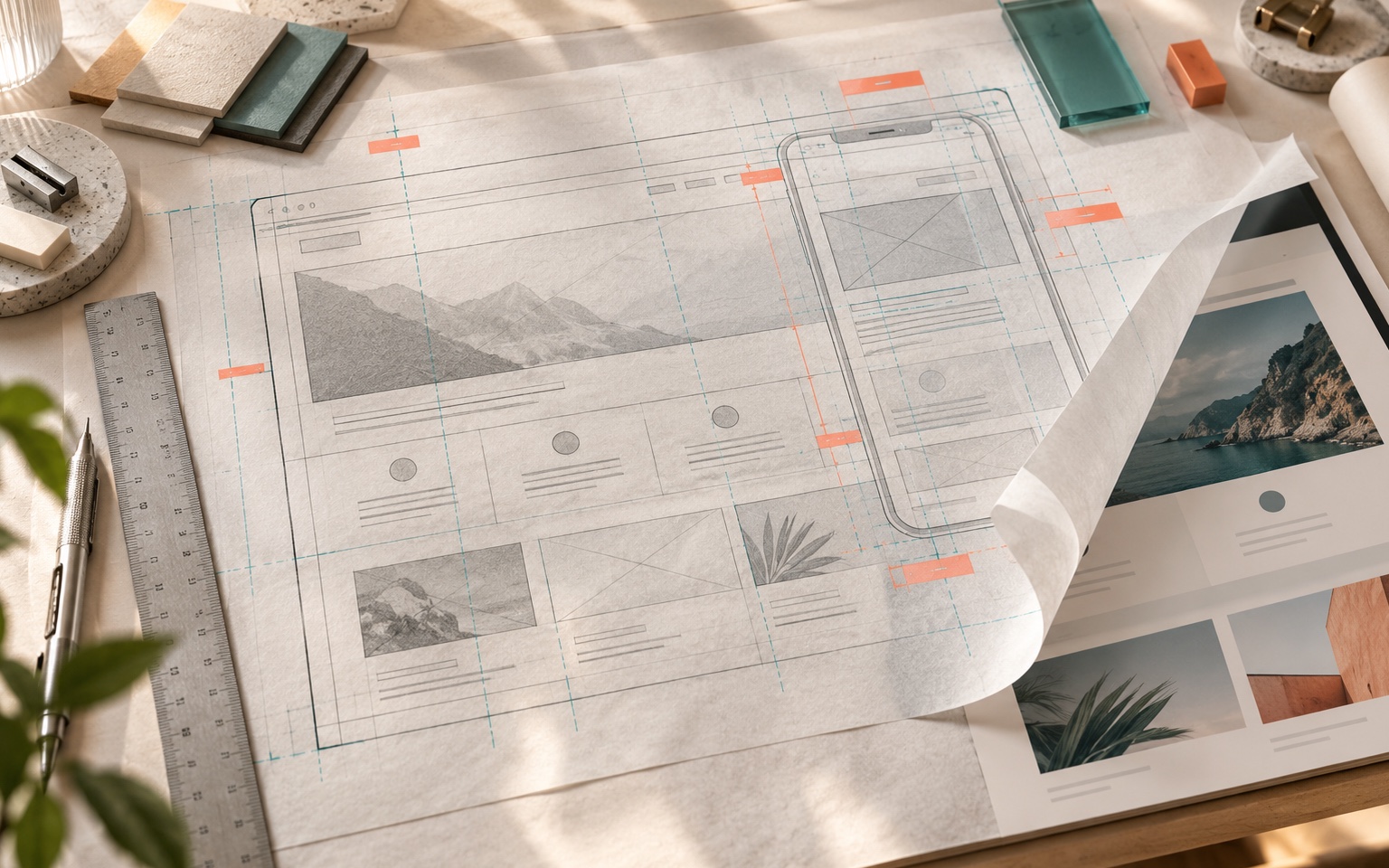
A website redesign often begins when a business becomes tired of how the site looks. The colours feel dated, the layout feels familiar and competitors appear more polished. Visual improvement can be worthwhile, but appearance is rarely the only issue.
If the offer is unclear, the navigation is confusing or the mobile experience creates friction, a new visual style will simply place better decoration around the same problems. A useful redesign begins with evidence and decisions before anyone starts choosing fonts.
Define what the redesign must improve
“Make it modern” is not a measurable objective. Decide what the new website needs to do better. It might need to generate more qualified enquiries, explain several services more clearly, support a new market, improve online sales or make publishing easier for the internal team.
Choose a small number of priorities and rank them. Trade offs will appear during the project, and a clear order helps the team make consistent decisions.
Read the current website before replacing it
Existing data can show where people arrive, which pages they visit, where they leave and which journeys lead to an enquiry or sale. Search data may reveal pages that already attract valuable traffic. Customer questions can show where the copy creates confusion.
Do not remove a page simply because it looks old. It may hold useful search visibility, answer an important question or support a conversion path that is not obvious from the design.
Decide what deserves to stay
A redesign does not require replacing every element. The current site may contain a familiar phrase, a useful comparison, a trusted photograph or a page customers regularly share. Record these assets before the new direction begins.
Keeping what works also makes the project more efficient. The goal is not to prove that every previous decision was wrong. It is to preserve useful equity while removing friction and making the experience more coherent.
Clarify the offer and audience
A redesign is much easier when everyone agrees on what the business sells and who needs it. Review service names, packages, customer groups and positioning before mapping pages.
If the business has changed since the current site was built, the new structure should reflect the present offer rather than preserving old internal categories.
A redesign should make the business easier to understand, not simply more impressive to look at.
Plan the content before the final layout
Designing around placeholder copy often creates pages that look balanced in a mockup but struggle when real information arrives. Draft the main message, proof, service details and calls to action early enough to influence the layout.
Content does not need to be perfectly polished before design starts, but the team should know what each page needs to communicate and how much evidence is available.
Simplify the information architecture
Navigation should use language customers recognise. Group related information, reduce duplicate pages and give important services enough room to explain their value.
Map the journey from the homepage to the service page, proof and enquiry. If visitors must keep returning to the menu to understand what to do next, the structure needs work.
Design mobile journeys deliberately
Mobile design is not the desktop layout stacked into one narrow column. The order of information may need to change. Calls to action should remain easy to reach, text should be comfortable to read and images should retain their meaning when cropped.
Test important tasks on a real device. Open the menu, compare services, complete a form and return to a previous page. Small frustrations are easier to notice when you are using the site rather than inspecting a static design.
Protect search visibility during the move
Changing page addresses without a redirect can lose useful links and send visitors to errors. Keep valuable URLs where possible. When a change is necessary, map the old address to the most relevant new page before launch.
Carry over useful page titles, descriptions and headings thoughtfully. Check image alternative text, internal links, canonical tags and indexation settings. Make sure staging controls do not accidentally remain active on the public site.
Decide what needs to be measured
Analytics should be part of the build, not a task left until after launch. Define important events such as form completions, booked calls, purchases, downloads and clicks to contact details.
Record the current baseline before the redesign goes live. Without it, the team may know that the new site looks better but cannot tell whether it works better.
Prepare the people who will run the site
A website becomes difficult to maintain when the editing experience is ignored. Decide who will update services, add articles, change team profiles and manage enquiries. Give them clear components and guidance rather than a page builder full of unexplained options.
Include training, documentation and ownership in the project plan. A well designed site can quickly lose consistency if everyday updates are unnecessarily difficult.
Run a careful launch check
Before launch, review forms, buttons, navigation, redirects, legal pages, analytics, mobile layouts and page speed. Check confirmation emails and thank you pages. Ask someone who was not involved in the build to complete the most important customer journeys.
After launch, watch real behaviour and fix genuine friction. A website is not finished because the new design is visible. It is ready when the important journeys work and the team can improve them confidently.
Our web and app design service combines strategy, user experience, design and development so the finished site supports the business rather than only refreshing its appearance.